Steel vs Aluminium Privacy Screens: Which Material is Right for Your Project?
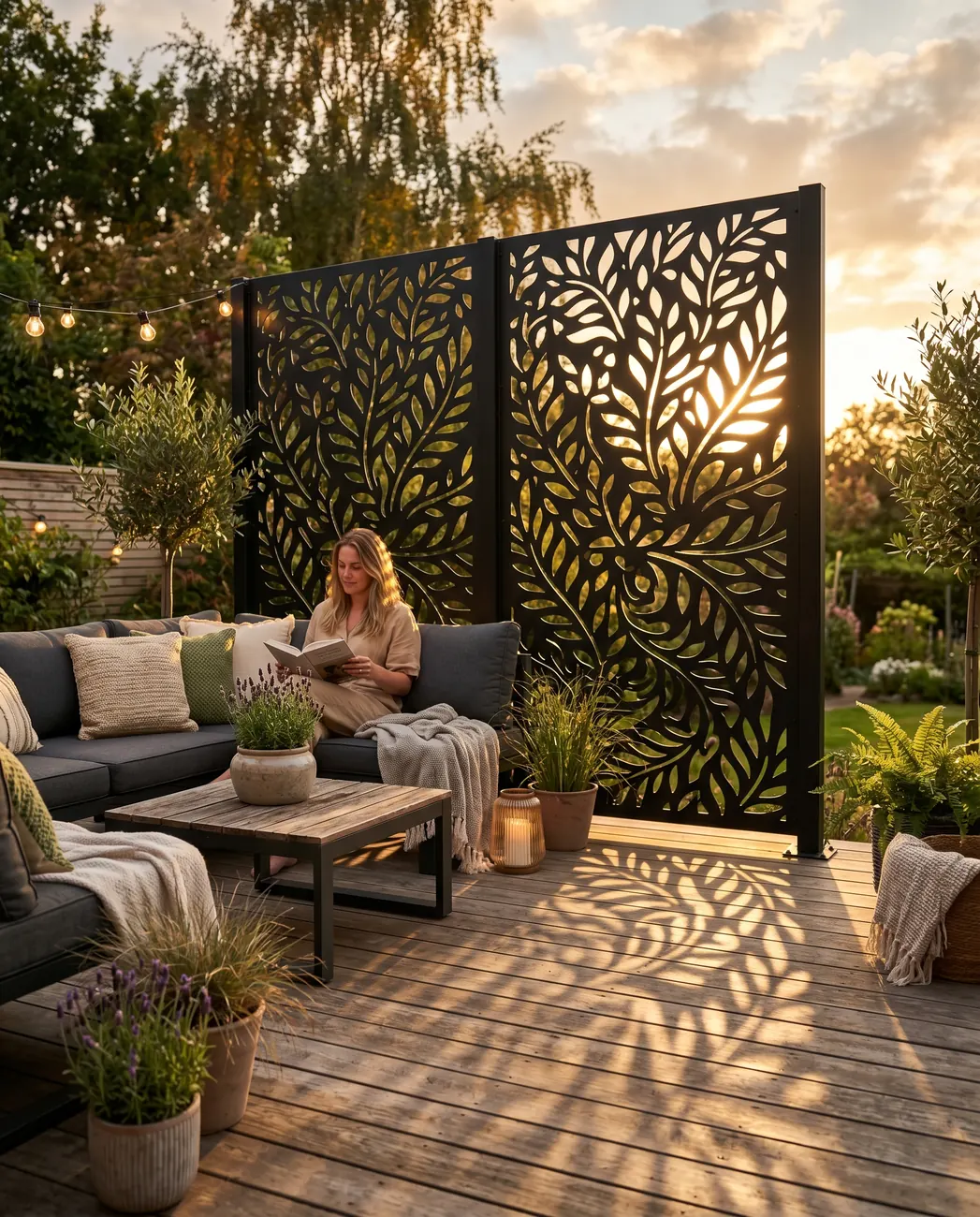
The material your privacy screen is made from matters more than most people realise — and where you live determines everything.
Most customers who contact us have already chosen a design they love. They know the pattern they want, they have a rough idea of the size, and they’re ready to get a quote. What they haven’t thought about — almost without exception — is whether the material they’re imagining is actually the right one for their location. It’s one of the first things we check, and it’s one of the most important.
Get the material wrong and the design won’t matter.
Why Most Customers Don’t Think to Ask About Material
The vast majority of customers never mention aluminium or stainless steel unprompted.
They come to us with a design in mind and assume — reasonably — that we’ll handle the rest. And we do, but only because we’ve built a location check into our process from the start. Before we quote anything, we find out where the screen is going. Inland or coastal is the single most important variable in material selection, and it’s one that customers rarely know to raise themselves. A lot of people genuinely don’t know that mild steel shouldn’t be used in coastal areas.
That’s not a criticism — it’s just not common knowledge until someone tells you.
The Simple Rule: Inland vs Coastal
The decision between steel and aluminium comes down to one question: how close are you to the ocean?
For inland areas — Johannesburg, Pretoria, and most of the interior — mild steel with a powder coat finish is an excellent choice for both internal and external applications. It’s strong, it machines beautifully with a laser, and a properly applied powder coat gives you outstanding corrosion resistance in a non-coastal environment. For coastal areas — anywhere within roughly 10 to 15 kilometres of the ocean, and especially beachfront or seafacing properties — mild steel is the wrong choice. Salt air accelerates corrosion in a way that powder coating alone cannot fully prevent. In those environments, aluminium or stainless steel is the correct specification.
One question about location saves a very expensive mistake later.
What Happens When Mild Steel Goes to the Coast
We’ve supplied screens to coastal areas where mild steel was requested, and we’ve seen what happens.
It’s not a gradual process — coastal corrosion on mild steel can become visible within a year or two, starting at any point where the powder coat has been compromised: a drill hole made during installation, a scratch from handling, a small chip at an edge. Once the coating is breached, salt air gets into the metal and the rusting accelerates from the inside out. By the time it’s visible on the surface, the damage underneath is usually already significant. This is why we always verify the installation location before we quote, regardless of what the customer requests.
A screen should last decades — not seasons.
Why Inland Powder Coating Requires More Upfront Work
For mild steel in inland areas, the powder coating process has to be done right the first time — and completely.
Any holes, cutouts, or adjustments that the screen needs must be made before powder coating, not after. Once the coating is applied and cured, it forms a sealed barrier against moisture and oxidation. Drill a hole through it post-coating and you’ve exposed bare metal — and in an outdoor environment, that exposed edge will eventually rust. This is why we do all our preparation work upfront, before the screen goes into the coating process. With aluminium or stainless steel, this constraint doesn’t apply in the same way — you can make adjustments after coating without compromising the long-term integrity of the material.
Inland steel is lower cost, but it rewards careful process.
Is There a Cost Difference Between Steel and Aluminium?
Yes — aluminium and stainless steel carry a higher price than mild steel.
The gap isn’t dramatic, but it’s real. For coastal buyers, though, the comparison isn’t really between the upfront cost of mild steel and the upfront cost of aluminium — it’s between the cost of aluminium once and the cost of replacing a rusted mild steel screen in three years. When you factor in longevity, the premium material almost always works out cheaper over the life of the product. For inland buyers, mild steel powder coated remains the best value option without any meaningful compromise on durability or appearance.
Buy for your location, not just your budget.
How We Make Sure You Get the Right Material
Every enquiry we receive gets a location check before anything else.
It takes one question and thirty seconds, and it means we never quote the wrong material for your environment. If you’re inland, we’ll specify mild steel and handle all the preparation before powder coating. If you’re coastal, we’ll recommend aluminium or stainless steel and explain why. If you’re somewhere in between — a highveld property with a coastal holiday home, or a development near an estuary — we’ll talk it through and make the right call together. The goal is always a screen that looks exactly the way you imagined it and is still looking that way ten years from now.
Get in touch and tell us where you are — we’ll take it from there.
Ready to Specify the Right Screen for Your Space?
Material, design, dimensions, and finish — every decision affects the final result.
At Deco Zoosh, we manufacture custom laser cut privacy screens in mild steel, aluminium, and stainless steel, matched to your location, your space, and your aesthetic. Every screen is cut to your exact dimensions and finished to a standard we’re happy to put our name on. Send us a photo, tell us where you are, and give us a rough height and width — we’ll handle the rest.
Browse our laser cut privacy screens and find the right design for your project.